Add Us as a Preferred Source
Takeout is the best kind of comfort food. It shows up when the day’s been too long, the fridge is too empty, or you just want something hot that doesn’t ask too much of you. But behind every carton of fried rice or glossy plate of orange chicken, there’s a story that rarely gets told. Many of the dishes we think of as “Chinese” didn’t come from China at all. They were born in American kitchens where immigrant cooks worked long hours, blending the flavors they knew with the ingredients they could get and the tastes that appealed to their new customers.
These dishes didn’t just adapt to American preferences, they bridged cultures, built communities, and kept people fed in unfamiliar places. And whether you pick them up from a takeout counter or make them yourself, they still deliver what they always have: fast comfort that feels like home.
This post may contain affiliate links. As an Amazon Associate, I earn from qualifying purchases. See my Affiliate Disclosure.

Orange Chicken
Orange Chicken is the fast casual version of an immigrant success story and the poster dish for the cuisine now known as American Chinese Food. Panda Express created it in the 1980s, borrowing from Hunan-style fried chicken, toning down the spice, and adding a bright, sweet glaze. It was engineered to appeal to Americans’ love of sweet-savory dishes with that crispy, crunchy bite.
Orange Chicken isn’t a dish you’ll find in traditional Chinese cooking, but rather a product of the American Chinese restaurant world. Still, the idea—crispy fried chicken in a bold sauce—feels familiar enough that it makes sense. The appeal is that crunch, the sticky sauce, and the way it hits that sweet-salty spot that makes you go back for one more bite even when you’re full. Today, Orange Chicken defines the category of American comfort food known as American Chinese Food.
Chop suey

No dish captures the Chinese-American story better than Chop Suey. It likely started in the late 1800s when Chinese cooks working in the U.S. tossed together leftover meat and vegetables with soy sauce to feed hungry laborers or late-night customers. The name comes from tsa sui in Cantonese, meaning “mixed bits,” which fits its scrappy beginnings.
Chop Suey isn’t something you’ll find in China—it’s an American invention built on Chinese technique and resourcefulness. The exact origin story depends on who you ask: some credit a San Francisco cook improvising after-hours, others point to Chinese railroad workers feeding themselves with what they had on hand. Either way, it became the first big “Chinese” hit in America, the dish that helped Chinese restaurants break into mainstream dining.
Even though it’s faded from most modern menus, Chop Suey paved the way for everything that came after. It proved that Chinese flavors could fit into American life—and that adaptation could be its own kind of authenticity.
General Tso’s Chicken (or shrimp!)

Sweet, spicy, and sticky in the best way, General Tso’s Chicken feels like a dish straight out of China. The truth is, it was created in New York City in the 1970s by a Taiwanese chef named Peng Chang-kuei. He named it after a 19th-century Hunan general, then adjusted the flavors for American diners with less heat, more sweetness, and a crisp fried coating.
You won’t find it on menus in China, but that doesn’t make it any less real. It’s a story about adaptation, not fakery. General Tso’s Chicken is comfort food built on resourcefulness and an instinct for what people want to eat.
Mongolian Beef
Despite the name, Mongolian Beef has nothing to do with Mongolia. It started in Taiwanese barbecue restaurants before finding its way onto American Chinese menus. The name added a bit of mystery, but the real magic has always come from the sauce — a mixture of soy, garlic, and brown sugar — and that perfect caramelized edge from the wok.
Singapore Noodles

Singapore Noodles don’t come from Singapore. The stir-fried rice noodle dish was created by Cantonese chefs in in Hong Kong in the 1950s or 1960s, when cooks started mixing curry powder with Cantonese-style stir-fries. They called it Singapore Noodles to evoke the sophistication of cosmopolitan Singapore. The name stuck because it sounded exotic, but the real draw was how well the flavors played together. Singapore Noodles are a mix of Indian spice, Chinese rice noodles, and global imagination. It’s the kind of hybrid that defines what takeout is all about.
Kung Pao Chicken

Want to save this recipe?
Kung Pao Chicken began in Sichuan, where it was all about heat, vinegar, and those mouth-numbing Sichuan peppercorns. When it crossed the ocean, cooks dialed back the spice, thickened the sauce, and added peanuts for a little texture. Originally a fiery dish, the American-Chinese adaptation is milder and more approachable, the kind of thing you can eat on a Tuesday without needing a cold beer and a fire extinguisher.
Wontons
Wontons have been part of Chinese cooking for centuries, but the versions most Americans know came from Chinese immigrants who adapted their traditions to fit a new audience. Early Chinatowns served wontons much like they were in China—boiled and floating in soup—but by the mid-20th century, fried wontons had taken hold. They were crisp, golden, and filled with pork, shrimp, or whatever the local market offered.
Then came the American twist: cream cheese, crab, and sweet-and-sour dipping sauce. Dishes like Crab Rangoon were never found in China, but they spoke to American tastes—rich, crunchy, and easy to love. Over time, these fried wontons became as much a part of American Chinese food culture as egg rolls or fortune cookies.
Today, they’re a reminder of how immigrant cooking evolves. What started as a humble dumpling became a bridge between two food traditions—still familiar, still comforting, but entirely its own thing.
Egg Rolls

Despite common beliefs, Egg Rolls and Spring Rolls are not the same thing. Spring Rolls are the lighter, flakier cousin of egg rolls, but in the U.S., the two terms often get tangled. Spring rolls, with a thin and crisp wrapper, are an authentic Chinese food with a long heritage. Egg rolls, on the other hand, were born from adaptation.
Chinese immigrants brought spring rolls — thin skinned, filled with fresh vegetables, and quickly fried to a shattering crisp — to the U.S. in the late 19th and early 20th centuries, but the egg rolls most Americans know came later. By the 1930s, New York City chefs like Henry Low and Lum Fong were serving crisp, golden rolls with chewy, thick wrappers filled with pork, cabbage, and shrimp. It was an evolution that catered to local tastes and American expectations for crunch and richness.
The earliest recipes probably included egg in the wrapper dough, though the modern version usually doesn’t contain any egg at all. The egg roll may not have roots in China, but it captures something real about Chinese American food: the way tradition reshapes itself to survive and thrive in a new place.
Air Fryer Spring Rolls, which use the thinner spring roll wrappers, are closer to the original, but with some major western twists, like cooking them in their air fryer for one thing. They’re crisp, fast, and a little lighter than their deep-fried relatives, but they still deliver that same satisfying crunch.
Salt and Pepper Chicken Wings

Salt and Pepper Chicken Wings began in Cantonese kitchens but took on a new life in Western Chinese restaurants. Fried until shatter-crisp, then tossed with garlic, scallions, chilies, and mouth-numbing Sichuan pepper, they became a late-night favorite that crossed cultures in record time.
Salt and Pepper Chicken Wings are pure comfort—simple, spicy, and built for sharing. It’s the kind of dish that needs no sauce and no explanation, just another bite.
Classic Pork Fried Rice
Fried rice started as a way to stretch leftovers, turning cold rice and scraps of meat or vegetables into a meal. In the U.S., it became a staple of virtually every takeout menu. Soy sauce, eggs, peas, and a quick toss in a hot pan turned something practical into something craveable. Classic Pork Fried Rice is the definition of comfort food that doesn’t need fanfare. It’s adaptable, familiar, and just as good cold from the fridge the next morning.
Egg Drop Soup
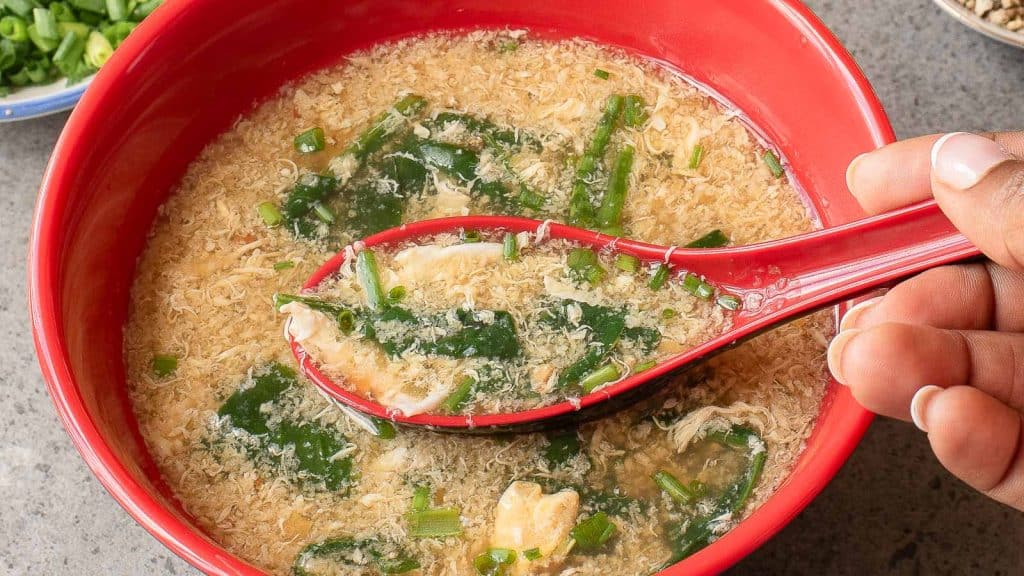
Egg Drop Soup has always been about comfort. The Chinese version is light and brothy, while the American takeout version became thicker and a little richer, often served with crispy noodles on the side. It’s a starter, a cure-all, and sometimes the only thing that sounds right when nothing else does.
Egg Drop Soup is what happens when something simple becomes a ritual. A warm bowl, a swirl of egg, and the kind of quiet satisfaction that never goes out of style.
The story of takeout isn’t about imitation. It’s about invention. Immigrant cooks took what they knew, adapted it with what they had, and built something lasting. These dishes might not match their supposed origins, but they’ve earned their place at the table. Comfort food isn’t about where a dish comes from. It’s about where it lands—and who it feeds along the way.