
 Add Us as a Preferred Source

Daikon Radish Pickled Japanese Style (called Takuan in Japanese) is a must-have side dish for Karaage Chicken, Miso Glazed Salmon, or for our homemade sushi nights.
This post may contain affiliate links. As an Amazon Associate, I earn from qualifying purchases. See my Affiliate Disclosure.

It’s delicious on its own or as part of a larger dish. Serve it with steamed rice for a quick, healthy snack, tuck it into futomaki (large sushi rolls filled with marinated, cooked, and raw vegetables and often egg or fish), or as a filling for Onigiri.
This recipe is both similar to and distinctly different from Vietnamese style Pickled Daikon and Carrots, which are one of the essential toppings Banh Mi Sandwiches.
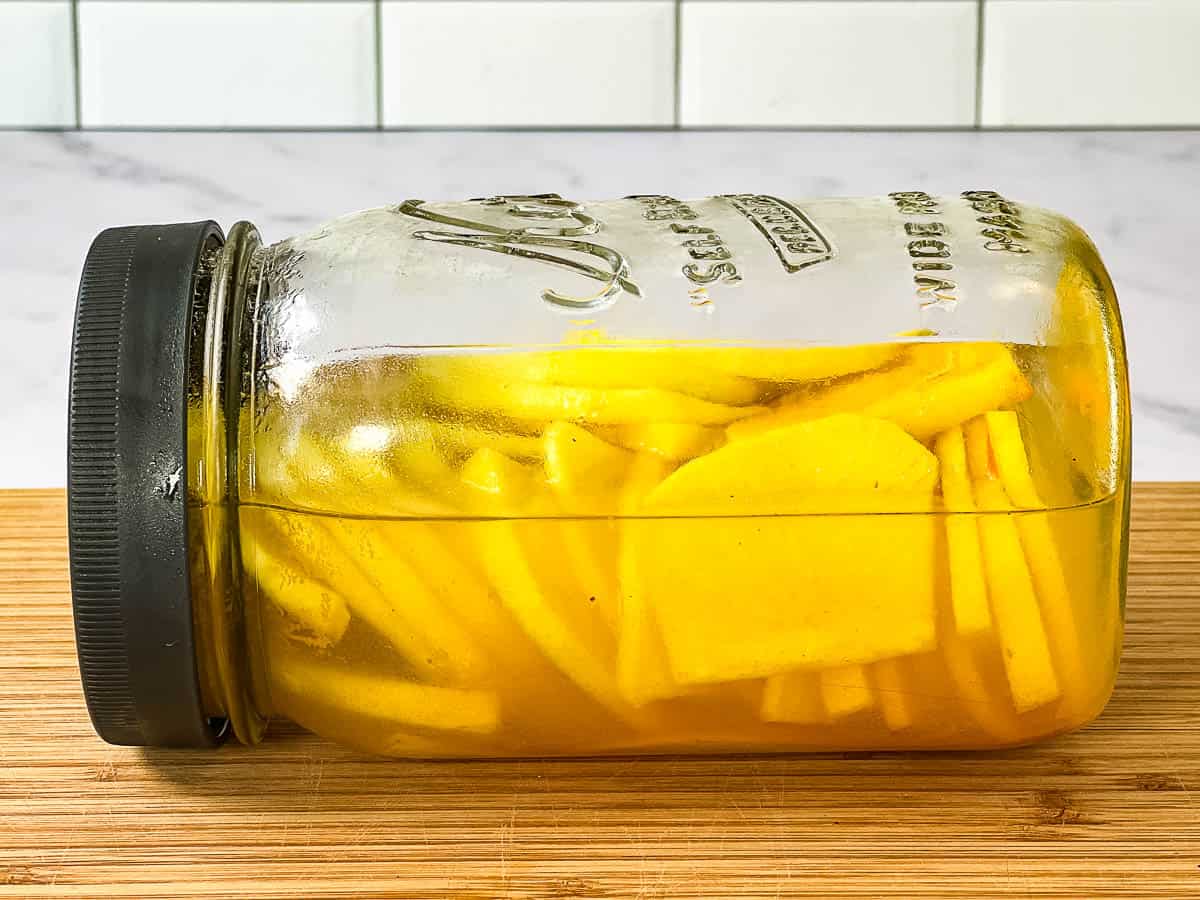
The large white daikon radish is sliced and marinated in a mixture of rice vinegar, salt, and sugar. Ground turmeric gives it a distinctive bright yellow color. It’s pleasantly crunchy and bursting with tart, sweet, and salty flavor.
Like Sunomono, Takuan or Pickled Daikon Radish is a quick pickled vegetable side dish (called tsukemono in Japanese). It’s usually served alongside main dishes and rice.
It adds color to the plate and bright, acidic flavor, too. Like the pickled ginger that’s usually served alongside sushi, these pickles are refreshing palate cleansers.
The hands-on time required to make it is only about 5 to 10 minutes. The rest is just standing and marinating time. Plus, you can make a jar of this Daikon Pickle and keep it in the refrigerator for months so you’ll always have a pretty and delicious side or final touch for your meals.
What is daikon radish?
Daikon is a large, long, white radish. It almost looks like a giant, white, fat carrot. The taste is similar to the little pink radishes that are more common in the US, but a milder version. You can serve them cooked, raw, or pickled. They’re a delicious alternative to potatoes in a braised short rib dish.
You’ll find fresh daikon radishes in the produce aisle of Asian supermarkets or supermarkets with good Asian ingredient sections.

Ingredient Notes
There are just a handful of ingredients in this easy Japanese Pickled Daikon recipe. Here are a few things to keep in mind:
Want to save this recipe?
- Daikon radish: Look for one that is heavy and smooth-skinned. Avoid any that look dried out. One with the root and/or leaves still attached is ideal. You’ll find fresh daikon radish in the produce section in any Japanese market, Korean market, or large Asian grocery store. Many well-stocked supermarkets also carry daikon radish.
- Rice vinegar: Choose unseasoned rice vinegar. Seasoned rice vinegar has salt and often sugar added. You want to control the seasonings yourself, so I always recommend the unseasoned variety.
- Ground turmeric: This is important for giving the Takuan that distinctive bright yellow color. It also adds a nice hint of mustard-y flavor. You can skip it, but your pickles won’t be as pretty!
How do you make it?
Pickled Daikon Radish or Takuan is super easy to make. It’s a quick refrigerator pickle, so it just involves making a brine, adding the radish slices, and then letting it stand overnight in the refrigerator. Here’s how:
- Peel, slice, and salt the daikon radish, letting it stand for about an hour to pull out the excess moisture. This helps the radish soak up more of the brine.
- Meanwhile, make a brine by combining the sugar, vinegar, and water and heating it up to dissolve the sugar. Add the turmeric to this brine.
- Put the salted daikon in a heat-safe glass jar—I like to use wide-mouth Ball canning jars. Pour the brine over. Put the lid on and shake or move the jar around to make sure to coat all the radish slices with the brine.
- Refrigerate overnight.

Serving Suggestions
Takuan is a common sushi filling, particularly in futomaki. I love to put it inside Onigiri or serve it along with Yaki Onigiri. It’s also perfect with rice alongside Japanese dishes like Miso Glazed Salmon or Chicken Karaage.
You can julienne the slices and add the strips to Beef Yakisoba or Shrimp Yakisoba. Or serve it as a side dish with Spicy Miso Ramen.
Or try it as a palate cleanser with any fried Asian food like Ramen Fried Chicken, Salt and Pepper Chicken, or Salt and Pepper Tofu. The acidity is so refreshing when juxtaposed with fatty fried foods.

Pickled Daikon Radish (Takuan)
Robin Donovan
Ingredients
- 1 daikon radish about 1 pound, peeled and cut into thin rounds or half-rounds
- 1 tablespoon kosher salt
- ½ cup granulated sugar
- ½ cup rice vinegar
- ¼ cup water
- 1 teaspoon ground turmeric
Instructions
- Place the sliced daikon in a colander and add the salt. Toss
to mix and then let stand in the sink or over a large bowl for about 1 hour. - Transfer the daikon to a glass jar.
- In a small saucepan, combine the sugar, vinegar, and water
and heat over medium heat, stirring frequently, until the sugar dissolves. Remove the pan from the heat and stir in the turmeric. - Pour the vinegar mixture over the daikon slices in the jar. Cap the jar, shake to make sure all of the daikon is in the brine.
- Refrigerate for 24 to 48 hours before serving.
Notes
Nutrition





Can you reuse the brine?
Yeah, I think you could. I’ve never done it, but I don’t see why not.
Can I use malt vinegar or apple cider vinegar?
Do you rinse the salt off the radish after it sits for an hour?
I do not rinse the salt off. It will mix with the vinegar in the jar to create a brine.
No, I don’t rinse off the salt. It will mix with the vinegar in the jar to make a brine.
What makes it stink so much? I love it, but that smell is worse than limburger cheese.
Haha! I know. It DOES stink! But it tastes so good!
What can be used instead of sugar
What can be used instead of sugar
I don’t know. I don’t have any experience with pressure canning.
I don’t know. I don’t have any experience with pressure canning.
I do not rinse the salt off first.
Do you let the brine cool before poiuring over the Daikon?
No, it’s better if it’s hot or at least warm when you pour it on.
I love it! Soooo good!
This is to Jordan who asked. You never pressure can anything pickled because it goes soft. Water bath can pickles and fruits always. The jar may seal on its own if you get the lid on fast enough.
Absolutely delicious!
Thinking about adding a jalapeno for a little extra spice, have you ever done that or anybody else done that?
Had some daikon in the garden that needed using and I came across this recipe. It is now going on my favourites list. It’s absolutely delicious and SO easy! I only had white vinegar so I added a little extra sugar to balance out the acidity. Thanks for sharing this!