

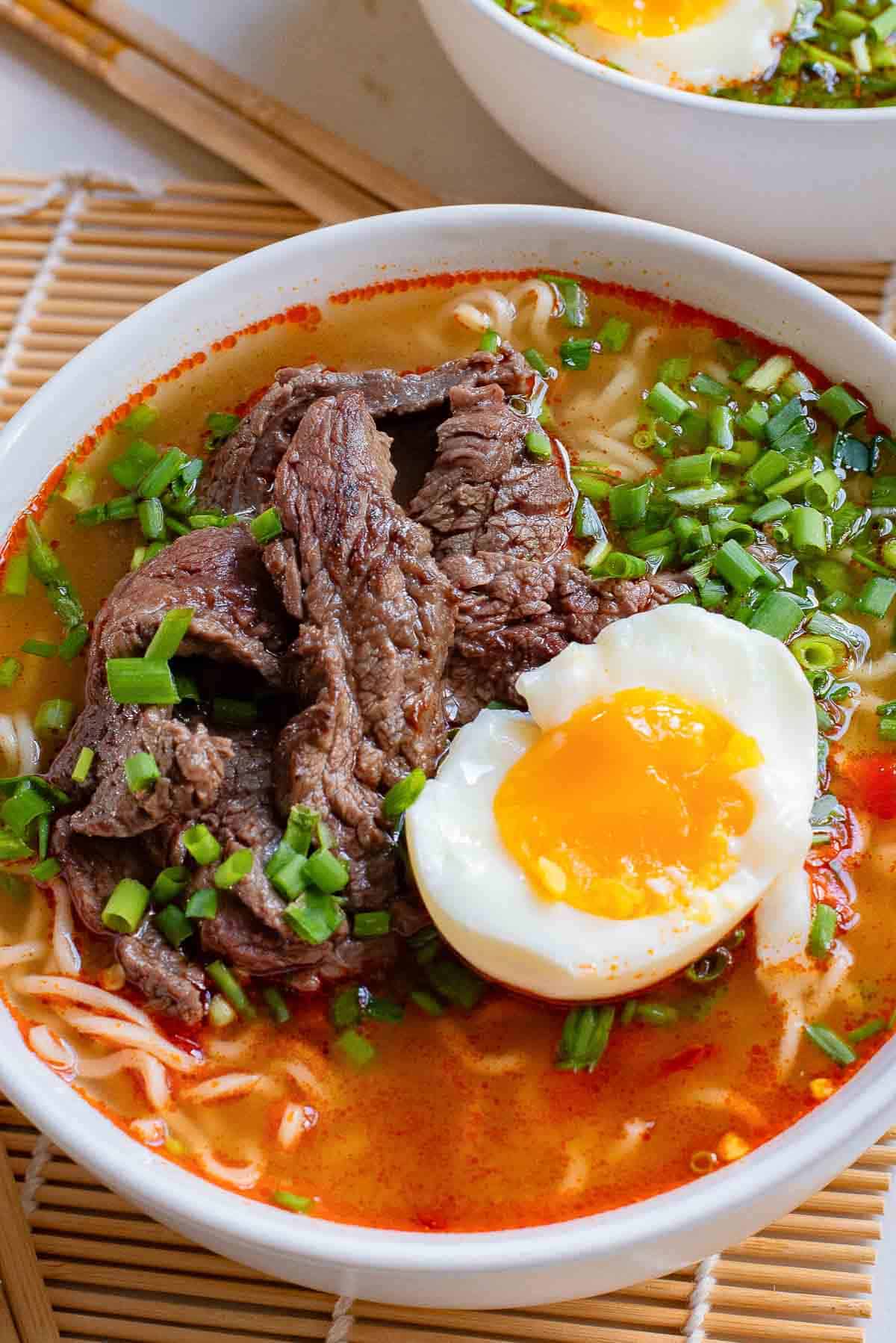
This Korean Ramen is the spiciest, most satisfying bowl of noodles I make all winter. I build the broth with gochugaru and gochujang until it’s got serious depth, then finish with a soft-boiled egg and a tangle of noodles that soak up every bit of that flavor.
This post may contain affiliate links. As an Amazon Associate, I earn from qualifying purchases. See my Affiliate Disclosure.
Want to save this recipe?
I’m a true lifelong ramen lover—from the instant noodle packets that fueled my frequent late-night study sessions in college to the extensive research I did, including devouring many, many delicious bowls of ramen and other ramen-based concoctions, while writing my cookbooks Ramen for Beginners and Ramen Obsession.
The broth for this Korean spicy beef ramen recipe starts with pre-made or store-bought chicken broth and gets rich, complex flavor from added ingredients like miso paste and gochujang. The flavors cling to each toothsome noodle.
Thinly sliced beef makes it hardy, but it’s the gochujang, garlic, sesame paste, and miso paste that give it that distinctly Korean flavor. Kimchi, perfectly jammy eggs, and green onions sprinkled on top add flavor, color, and texture to each bite. The first spoonful may surprise you with its fiery hit of chili pepper heat, but it’s balanced out by the sweet and nutty notes.
Ingredient Notes
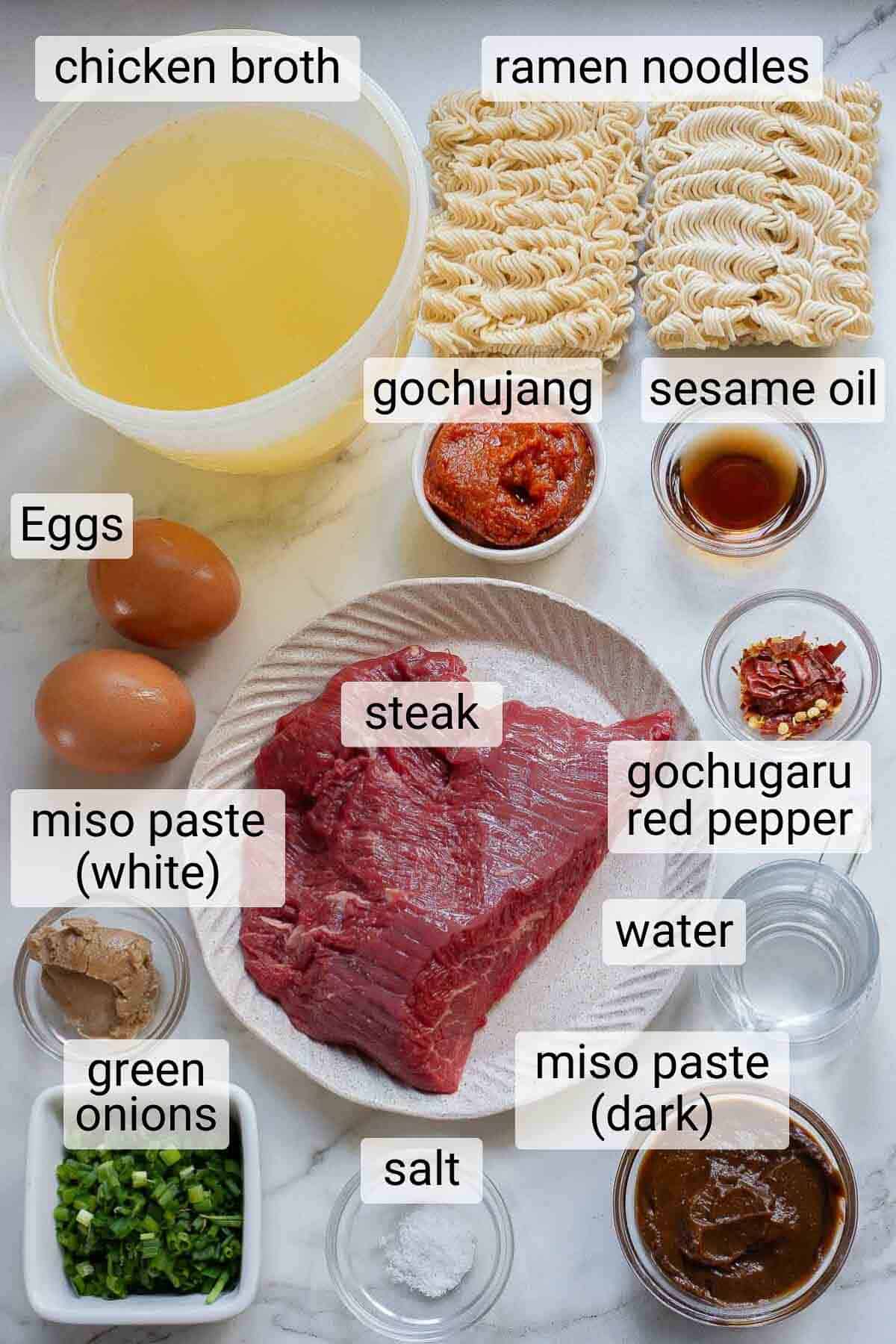
For the noodles, fresh ramen noodles give you the best texture, but dried noodles work fine if that’s what you have. They’re made from wheat flour and kansui, the alkalizing agent responsible for that springy bite. If you’re cooking for someone who can’t eat gluten, rice noodles make a good substitute.
Gochujang, Korean fermented chili paste, brings the signature heat to this broth, and I like to pair it with crushed red pepper flakes, ideally gochugaru, for even more depth. For the miso, I reach for white miso here since it’s milder than the darker varieties and won’t overpower everything else in the pot.
Sesame paste adds richness to the broth. Japanese sesame paste is my first choice, but Chinese sesame paste works well too. If you can’t find either, creamy, no-sugar-added peanut butter is a fine substitute. For the sesame oil, make sure it is 100% sesame oil and not a blend, since the flavor is what carries a lot of this dish.
For the meat, thinly sliced flank steak or brisket cooks fast and stays tender in the hot broth. And when it comes to toppings, don’t skip the kimchi and green onions. A soft-boiled egg or Soy Sauce Egg with a jammy yolk makes each bowl feel complete.


How to Make It
Here’s how I make this spicy Korean ramen recipe. The broth takes time to develop its deep, rich flavor, but the payoff is so worth it!
Start the noodles boiling about 30 minutes before you plan to serve, then, once they’re tender, drain them and set them aside.
While the noodles cook, start warming the broth in a stockpot and cook the sliced steak in a hot skillet with salt and sesame oil, just until it’s browned outside but still pink in the middle. Stir the miso paste, gochujang, crushed red pepper, and sesame paste into the broth until it’s fully combined.
To serve, divide the noodles among your bowls, ladle the hot broth over them, then top each bowl with the steak, a soft-boiled egg, green onions, kimchi, and a scattering of sesame seeds.

What to serve with it
Korean ramen with all the toppings is a satisfying a meal in itself. But, you know, a few sides never hurt anything, right? Traditional Korean cuisine is famous for its side dishes, called “banchan,” so it’s fitting to add a few. Quick Cucumber Kimchi is a refreshing and crunchy Korean salad that makes a great accompaniment. Stir-fried Lotus Root and Sunomono lean a little more towards the Japanese side of this fusion meal. You might also add a side of Kimchi Pancakes or follow it up with a dessert of the sweet, filled Korean pancakes, Hotteok.
Ready to experiment more with classic Korean flavors? Try my favorite Korean noodles, Gochujang Noodles, or stir-fried japchae noodles, glass noodles made from sweet potato starch. You’ll also love spicy Korean Fried Chicken and Bulgogi Beef Bowls.

Korean Ramen
Robin Donovan
Ingredients
- 18 ounces fresh ramen noodles 12 ounces dried ramen noodles or 2 packages instant ramen noodles
- 8 cups chicken broth
- ½ pound flank steak or skirt steak sliced into strips about ¼-inch thick
- 1 teaspoon kosher salt divided
- 2 teaspoons sesame oil
- ¼ cup white miso paste
- ¼ cup gochujang
- ½ to 1 teaspoon crushed red pepper flakes preferably gochugaru
- 1 tablespoon Japanese sesame paste
- ¼ cup water
- 2 soft-cooked eggs boiled for 6 minutes, halved
- 1 bunch green onions thinly sliced
- Toasted sesame seeds for garnish
Instructions
- Cook the noodles according to the package directions.
- In a stockpot, heat the broth over medium-high heat until simmering.
- Make the seasoning paste by stirring together the miso paste, gochujang, water, and crushed red pepper.
- Toss the sliced steak in a bowl with ½ teaspoon of the salt and the sesame oil.
- Heat a skillet over medium-high heat. When it’s hot, add the steak and cook, stirring frequently, until it is just cooked but still a little pink in the center.
- Into each of 4 serving bowls, put ¼ of the seasoning paste. Divide the noodles between the bowls and ladle the hot broth over the noodles. Arrange steak, an egg half, and the green onions on top. Garnish with toasted sesame seeds and serve immediately.



This was KILLER. So much flavor, we were practically drinking the broth! The egg totally makes it – don’t skip that part. Really tasty recipe!
Hello! We made this recipe this week. It was delicious! Thank you for sharing it. We noticed that the broth instructions say to include garlic and rice wine, but neither of these are mentioned in the ingredients list or in the photos. Just FYI!
Sorry for the confusion! I fixed it 🙂
This source inspired me to be more creative and not be afraid to try new ideas when I cook.